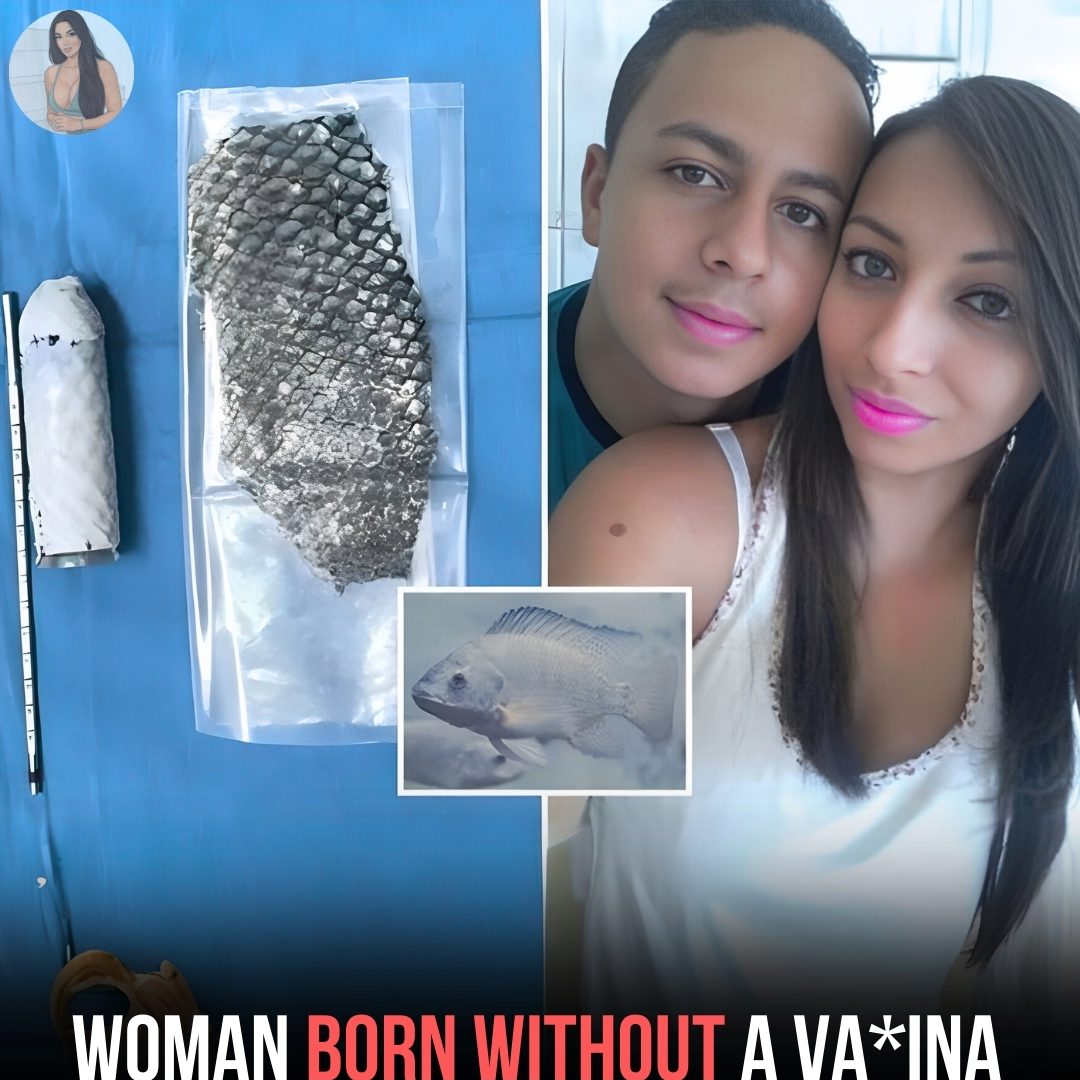
A 23-year-old woman born without a vagina recently underwent a groundbreaking surgical procedure that used fish skin to create a functional vagina, marking a world-first in medical history. The patient, Jucilene Marinho from Ceará, Brazil, suffers from a rare congenital disorder known as Mayer-Rokitansky-Küster-Hauser (MRKH) syndrome. This condition affects approximately one in every 5,000 female births and results in the absence of the uterus and vaginal canal, although the ovaries are usually functional. For years, Marinho lived with the crushing emotional weight of her diagnosis, believing she would never be able to experience a normal intimate relationship.
The innovative technique, performed at the Federal University of Ceará (UFC), allowed her to experience sexual intimacy for the first time in her life. The procedure, led by gynecologist Dr. Leonardo Bezerra, involved creating a space between the vagina and anus and inserting a tubular mold lined with the sterilized skin of Nile Tilapia—a fish abundant in Brazilian rivers. Tilapia skin was chosen because it is rich in Type 1 collagen and possesses moisture and elasticity levels comparable to human skin. Unlike traditional skin grafts, which require painful harvesting from the patient’s own groin or thighs and leave significant scarring, the fish skin acts as a biological scaffold. Over time, the patient’s body absorbs the collagen, and her own stem cells transform the fish skin into lining that mimics a natural vaginal canal.
Doctors say the procedure is part of cutting-edge research in tissue engineering and regenerative medicine, offering hope to women with congenital conditions or traumatic injuries. In Marinho’s case, the fish skin mold was left in place for several days to ensure the new tissue took hold. After approximately six months of recovery and dilation therapy, Marinho was cleared for sexual activity. She reported that her “first time” with her long-term boyfriend was free of pain and full of relief. “It felt so good to have something the majority of women take for granted,” she told reporters, adding that the surgery not only restored her anatomy but healed her self-esteem.
The story has captured global attention, highlighting how modern medicine is pushing the boundaries of what’s possible and improving quality of life for patients in unique ways. The success of the “Tilapia Vaginoplasty” has since opened doors for its use in other medical fields, including treating severe burn victims and even reconstructing vaginas for transgender patients who faced complications from traditional surgeries. By turning a common freshwater fish—often discarded as waste by the food industry—into a sophisticated medical device, the Brazilian team has proven that sometimes the most advanced solutions come from the most unexpected sources in nature.