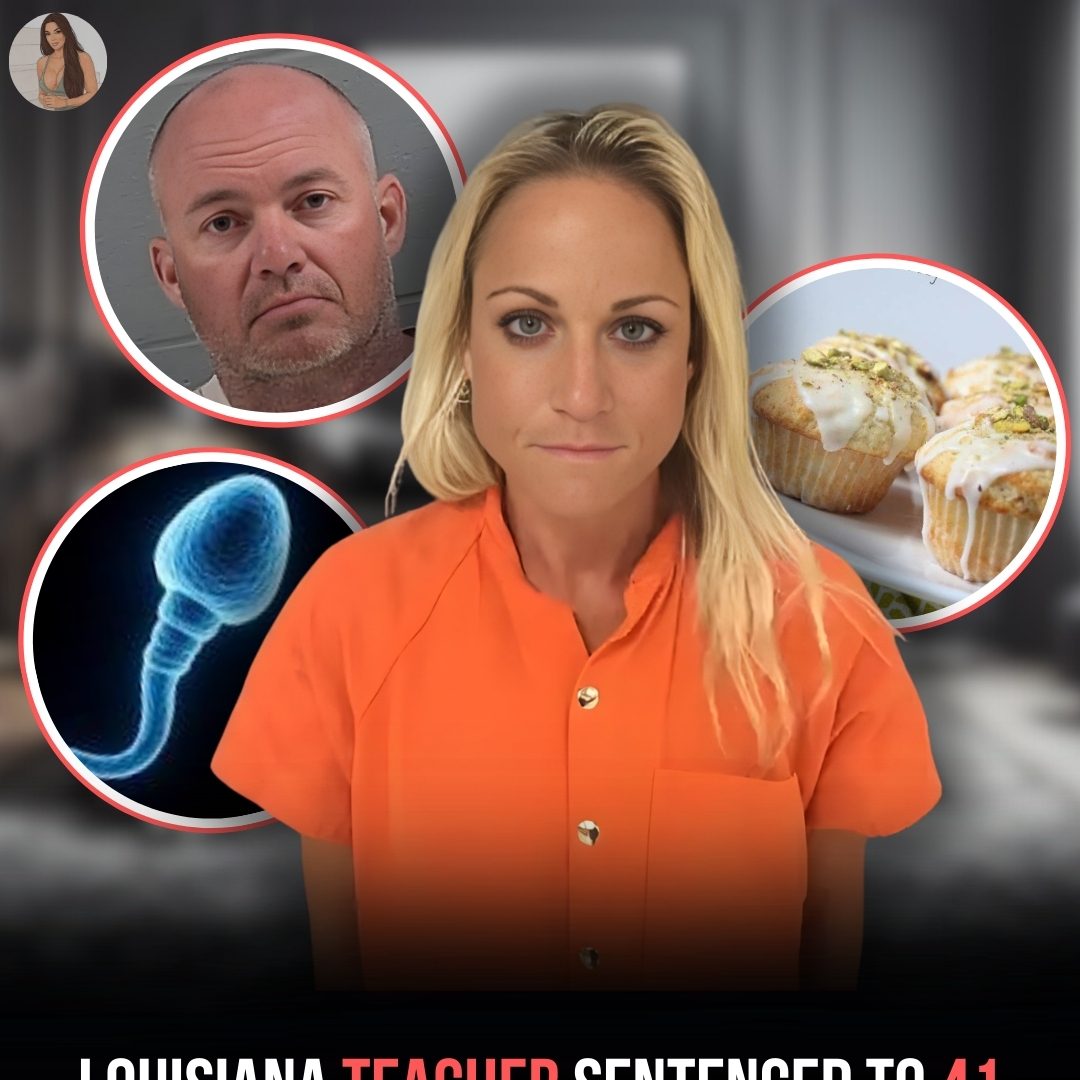
Cynthia Perkins, a former Louisiana teacher, was sentenced in 2022 to 41 years in prison after pleading guilty to a series of disturbing crimes involving her ex-husband, Dennis Perkins, a former sheriff’s lieutenant. Cynthia admitted to multiple offenses, including serving her students cupcakes tainted with her husband’s bodily fluids. The crimes came to light in 2019 when authorities discovered extensive evidence on the couple’s electronic devices linking them to numerous acts of abuse and misconduct. As part of a plea deal to avoid trial, Cynthia testified against her husband, who is now serving a 100-year sentence without parole. The case shocked the community and the broader public due to the depravity of the acts and the couple’s positions of trust — one as a teacher, the other in law enforcement.
The investigation began in Livingston Parish, a quiet community that was blindsided by the revelations. Investigators seized hard drives and phones belonging to the couple, uncovering a digital library of horrors that included thousands of images and videos documenting their crimes over several years. The evidence painted a picture of a shared psychosis, where Cynthia was not merely a passive spouse but an active participant in facilitating her husband’s perversions. As a teacher at Westside Junior High School, she had access to vulnerable children, a position she exploited in one of the most grotesque manners imaginable. She confessed to baking cupcakes, injecting them with Dennis’s sperm, and then distributing them to her students, who consumed them unaware of the biological contamination.
This specific act of “mingling harmful substances” became the defining symbol of the case, representing a total violation of the unspoken contract between parents and educators. However, the cupcakes were just one facet of a broader pattern of abuse. The couple was also charged with the production of child pornography and heinous sexual battery involving an unconscious victim. During the legal proceedings, the courtroom atmosphere was described as heavy and emotionally charged. Victim impact statements revealed the lasting psychological trauma inflicted on the community, with parents expressing disbelief that a “pillar of the community”—a law enforcement officer and a teacher—could harbor such darkness.
Cynthia’s decision to turn state’s evidence was pivotal. In exchange for a plea deal that capped her sentence at 41 years rather than a potential life term, she provided the prosecution with the necessary testimony to secure a conviction against Dennis Perkins. Her testimony was harrowing, detailing the manipulation and the specific mechanics of their crimes. While she attempted to portray herself partially as a victim of her husband’s coercive control, the judge and the public struggled to reconcile that defense with her active role in grooming and harming children. Dennis Perkins, who maintained his innocence throughout, was ultimately convicted on 100 counts, ensuring he would die in prison.
Cynthia Perkins’ sentencing marked the conclusion of one of the most disturbing criminal cases in Louisiana’s history, but the scars remain. The scandal forced a review of background check protocols and oversight within both the local school board and the sheriff’s office. For the victims and their families, the 41-year sentence offered a measure of justice, though many argued it was insufficient given the betrayal involved. As she was led away in handcuffs, it signaled the end of a suburban nightmare, leaving a community to grapple with the terrifying reality that monsters can sometimes hide in plain sight, standing at the front of a classroom or wearing a badge.